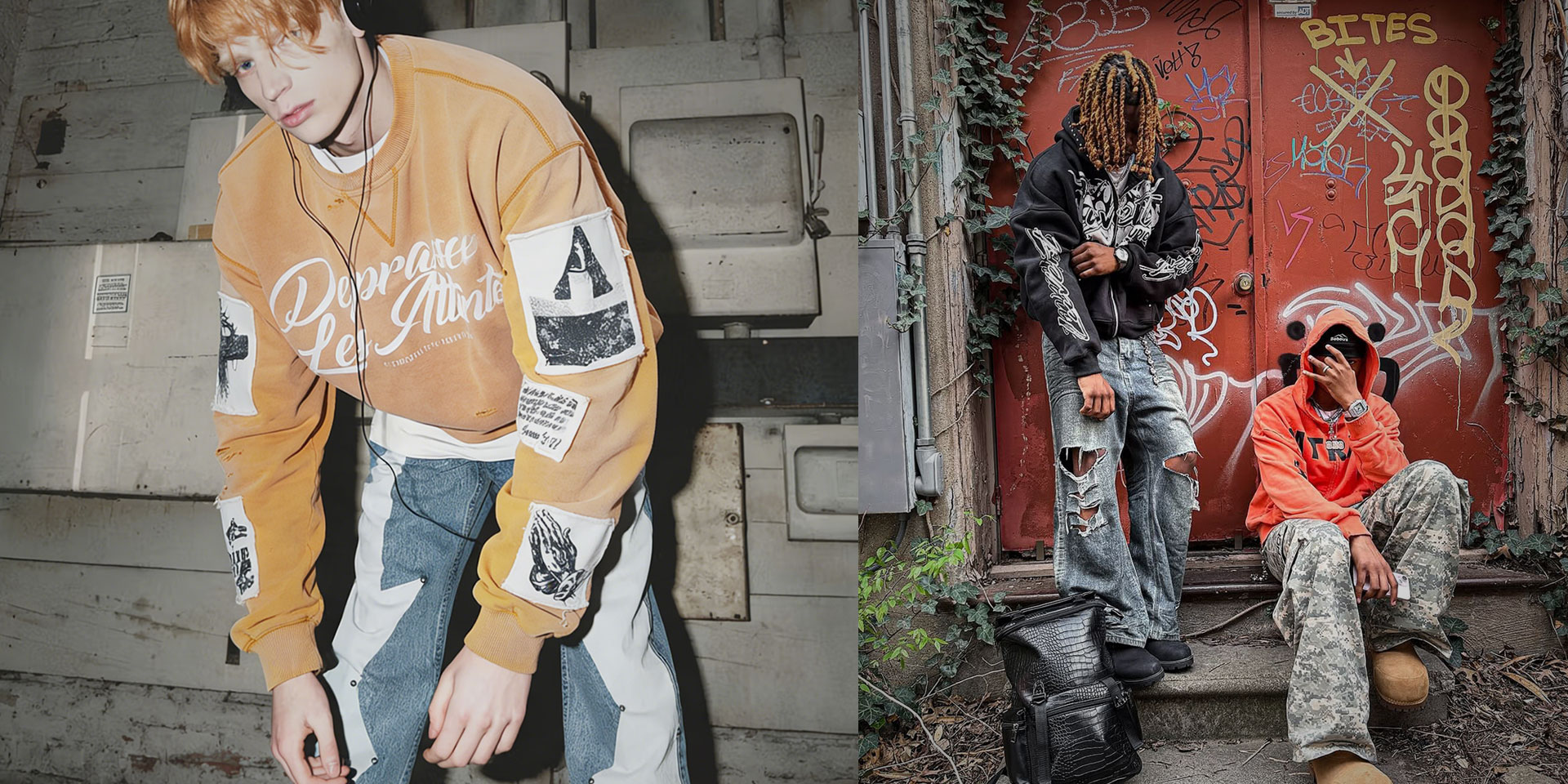
Looks Sharp in Sampling, Slips in Production: What Streetwear Brands Should Really Check Before Locking a Manufacturer
Streetwear teams are under a different kind of pressure now. A hoodie is not just a hoodie anymore, and a graphic tee is not getting judged from six feet away on a retail rack. People see the close-up. They pause on the wash. They notice how the rib sits, how the print lands, how the shoulder drops, how the fleece holds shape after wear, and whether the whole piece feels like it came from a real point of view or from a factory that just followed instructions without really understanding the product.
That is why a lot of brand teams find out too late that the hard part is not getting a sample made. The hard part is getting a product that still feels right when it moves from the sample room into real production. On paper, plenty of factories look capable. In practice, a washed boxy hoodie, a cropped football-inspired jersey, an appliqué varsity jacket, or flare denim with exaggerated stacking can expose every weak spot in development, sourcing, finishing, and execution. This article breaks down what established streetwear brands, sourcing teams, and product development teams should really look at before they commit to a streetwear manufacturer.
Why do so many factories look right on paper but miss the product once development starts?
Because streetwear failure usually starts before sewing, not after it. A factory can look polished in a deck and still miss the product if the team does not read silhouette, fabric behavior, graphic balance, wash direction, and trim interaction the way a streetwear brand actually needs them read.
This gap shows up early. A general apparel factory may be able to copy a reference image, cut a basic body, and send back something that looks fine in a flat lay. That is not the same as understanding why a heavyweight tee needs a certain neck shape to avoid looking flimsy, why a zip hoodie with distressing has to be planned around panel stress, or why a vintage wash can completely change how a print reads after finishing.
The real tell is not whether a factory says yes. It is whether the team asks the right questions before the first sample gets made. A strong will usually slow the conversation down in useful places. They will ask about target drape, post-wash measurements, intended body feel, graphic mood, trim priority, and where the product needs visual age versus where it needs structure. A weaker factory often just accepts the tech pack, follows it line by line, and leaves the brand team to discover the weak spots later.
That is also why broad factory lists are only a starting point, not a decision. When brands begin narrowing options, it helps to look at a more focused resource such as a recent roundup of , then move past the list and test who really understands your category, construction, and finish language.
Which product details show that a factory actually understands streetwear, not just casual basics?
The real signals are never the obvious ones. A factory starts to show genuine streetwear understanding when it can talk clearly about silhouette, fabric weight, graphic placement, wash depth, trim proportion, and how those details work together to create a product that feels deliberate rather than generic.
Streetwear is full of products that look simple until you break down what makes them hit. A washed boxy hoodie depends on more than fabric weight. The shoulder drop, hood shape, rib tension, and wash finish all affect whether the piece feels heavy and clean or just oversized in a lazy way. A cropped football-inspired jersey is not only about mesh or paneling. It is about how the crop sits, how the sleeve opening behaves, and whether the graphics still hold balance once the body proportion changes. A distress-heavy zip hoodie can lose all its attitude if the distressing is placed without thinking about seam reinforcement, zipper wave, or how the garment will soften after finishing.
That is why strong streetwear development is less about listing techniques and more about knowing what each technique is doing. Embroidery can add dimension to flat artwork, but it can also make a fleece panel too stiff if the backing and stitch density are wrong. Washing can give a product instant visual age, but it can also throw off measurement balance if the pattern was not built with shrinkage in mind. Fabric weight changes how a garment sits on the body, but it also affects collar recovery, hem shape, and how decoration holds over time.
A factory that really gets this usually talks in product logic, not brochure language. The team is less likely to say “we offer embroidery, screen print, and washing” and more likely to explain why one graphic is better in high-density screen print, why another should stay softer, why a denim wash needs another test round, or why a varsity jacket patch order needs to be locked before panel construction moves forward.
Where does a strong sample usually start to drift once production moves into bulk?
Most drift starts in the handoff between approval and scale. The sample may look right, but once fabric lots change, wash volume increases, trims get locked, operators multiply, and timing tightens, the product can move away from the original idea unless the factory has real sample-to-bulk alignment discipline.
This is the part many teams underestimate. A sample is controlled. The room is smaller, the pace is slower, and there is more attention on one garment. Production is different. The fabric may come from another lot. The wash house is handling volume, not one perfect test garment. The print that looked centered on that first sample may shift once multiple sizes run across bulk markers. A replacement drawcord or zipper pull may seem minor on paper but can change the entire visual balance of a finished hoodie.
Streetwear products are especially exposed here because so much of the final impression lives in details that are easy to disturb. A vintage tee can lose its whole mood if the wash comes back flatter than the approved trial. A pair of stacked sweatpants can collapse if the inseam balance is not controlled well enough. An appliqué varsity jacket can start feeling stiff and crowded if patch placement is not checked against real panel tension. A screen print that looked bold before washing can turn thin, cracked, or over-muted depending on sequence and curing.
The smarter brand teams treat this stage as a risk-control phase, not a paperwork phase. They do not just approve a sample and move on. They check fabric and trim locking, pre-production review, wash test approval, measurement logic after finishing, graphic placement by size, and how the factory plans inspection during bulk. They also watch how early the factory raises problems. A quiet team is not always a safe team. Sometimes it just means the warning signs are still sitting under the table.
One practical way to think about it is simple: the sample proves the look is possible; the production setup proves the look can hold together under real pressure.
How should sourcing teams and product developers pressure-test a factory before they lock the season?
The best pressure test is not one big question. It is a chain of smaller checks that reveal how the factory thinks. Strong teams can explain risk early, translate design intent into technical choices, and show how they protect fabric, fit, wash, graphics, and finishing once the order moves beyond the sample table.
This is where product development teams and sourcing teams need to get more specific than “Can you make this?” The better question is, “What could go wrong with this, and how would you handle it before it turns into delay, rework, or a product that no longer feels right?” A real streetwear manufacturer should be able to answer that without hiding behind vague confidence.
Brands usually get a clearer read when they pressure-test five areas in sequence. First comes tech pack review. Is the factory only receiving instructions, or is it actively flagging fit risk, shrinkage issues, decoration order, and trim conflicts? Then comes material logic. Does the team understand why this garment needs that exact fleece, rib, denim base, mesh quality, or wash route? Third is sampling discipline. Are print tests, embroidery tests, wash trials, and fitting adjustments being treated as essential checkpoints or as extra hassle?
The fourth area is production planning. A factory that really understands streetwear can explain where bulk pressure will show up first and how the line will be protected. The fifth is communication quality. Good teams do not only send updates. They explain decisions in a way brand teams can act on.
For brands comparing options, it often makes sense to move from broad search traffic to more specialized sources. Instead of staying in generic apparel directories, many teams end up reviewing specialized manufacturers for custom streetwear that are already positioned around heavyweight fabrics, wash-led development, and more technique-intensive categories.
A useful pressure test can be framed through a short verification flow:
1.Ask the factory to walk through the product, not just the quote.
2.Ask what part of the garment is most exposed once it goes through wash, print, or assembly.
3.Ask how measurements are checked after finishing, not only before.
4.Ask what substitutions are most likely if trims or fabric timelines move.
5.Ask which stage they would not skip if the calendar gets tight.
The answers usually tell you more than the sample photo ever will.
What kind of production setup actually supports heavyweight, wash-heavy, graphics-led collections?
It usually comes down to depth, not size. The factories that handle modern streetwear well are not always the ones with the biggest presentation. They are the ones with tighter control across sourcing, pattern work, wash development, decoration sequencing, finishing review, and communication from sample through production.
That matters even more for China-based production, which remains a major sourcing base for US, UK, and EU streetwear brands looking for fabric access, trim depth, wash capability, and category range in one supply chain. The advantage is not only labor or scale. It is the density of connected processes. A product may need fabric sourcing, pattern adjustment, screen print trials, embroidery backing decisions, wash testing, hardware coordination, finishing review, and final inspection all moving in rhythm. That is hard to do cleanly when those steps are scattered too far apart.
Still, regional strength means nothing if the factory itself is too general. A strong setup for streetwear usually has three layers working together. The first is development judgment: people who can read product intent and catch problems before they become expensive. The second is technical coordination: pattern, material, decoration, and wash decisions being made with each other in mind, not in separate silos. The third is production control: a line that knows how to protect the approved look once volume goes up.
This is where specialization starts to matter. Some factories are built for straightforward knitwear or broad casualwear programs. Others are structured for products that need more edge control: heavyweight fleece, pigment-dyed tees, cracked prints, panel hoodies, washed denim, patch-heavy outerwear, or mixed decoration. In the China-based premium segment, companies like are often referenced when teams compare more specialized streetwear production setups rather than broad apparel capacity alone.
The key point is that modern streetwear production is no longer only about whether a factory can make garments. It is about whether the system can carry product identity through development pressure, production pressure, and timeline pressure without flattening the original idea.
What should brands compare before they finally say yes?
The smartest comparison is not speed versus price. It is product understanding versus execution risk. Brands usually make stronger sourcing calls when they compare how each factory reads the garment, flags weak points, handles testing, and protects the approved direction once the style moves into real production.
There is a reason more experienced teams no longer judge a manufacturer by a neat sample room alone. Streetwear has become too detail-sensitive for that. The market is crowded, product photography is unforgiving, and buyers can feel when a garment has real shape, surface, and intention behind it. That means the factory decision now sits much closer to brand identity than many teams want to admit.
The brands that tend to move better are not always the loudest ones. They are the ones that treat sourcing as part of product development, not a separate purchasing task at the end of the line. They ask sharper questions. They pressure-test more than the first sample. They compare factories by product logic, not by presentation polish. And they understand that a manufacturer who can hold fabric, fit, wash, graphics, and finishing together is giving them more than production capacity. That team is giving the collection a better shot at landing the way it was meant to land.
Streetwear does not need flatter factory language. It needs manufacturing that can keep up with design direction, visual nuance, and the pace of real brand building. That is the shift. And for brands planning the next drop, the next capsule, or the next full seasonal line, that shift is worth taking seriously before the first bulk cut ever starts.
The Sample Hit Different: Why Heavyweight Hoodies Can Lose Shape, Feel, and Attitude in Bulk Production
A heavyweight hoodie can look flawless in sampling and still come back different in bulk. The shape sits right, the hood stands up, the fleece feels dense, the wash gives it that worn-in edge, and the whole piece lands exactly where a streetwear brand wants it to land. Then the bulk order arrives, and something feels off. The body drops differently. The color reads flatter. The cuff rebound is weaker. The hoodie is technically the same style, but it no longer hits with the same energy.
That gap is one of the most frustrating realities in modern streetwear development. Many established streetwear brands, design teams, and procurement teams find out too late that heavyweight fleece is not just “thicker fabric.” It is a category where fabric behavior, shrinkage, wash response, pattern balance, rib tension, cutting tolerance, and finishing discipline all start pulling on the final result at the same time. What looks like a simple hoodie question often turns into a full production control question.
For independent brands with real traction, this matters because heavyweight hoodies are no longer background basics. They are often the hero piece in a drop. A washed boxy pullover, a distress-heavy zip hoodie, or a dense fleece style with oversized shoulders and a compact body can carry the visual identity of an entire release. When that product changes between sample approval and bulk execution, the issue is not only technical. It can shift the whole story of the collection.
Why can a heavyweight hoodie look right in sampling and still feel different in bulk?
A heavyweight hoodie can change in bulk because sampling proves a concept, while bulk production exposes every variable at once: fabric lots, dye behavior, wash response, grading, cutting spread, sewing rhythm, and finishing control. Heavyweight fleece reacts more visibly to those variables than lighter products, so even small changes can reshape the final piece.
The first thing to understand is that a sample is usually built under conditions that are more controlled than bulk. The pattern is watched closely. The fabric may come from a limited lot. The sewing line is handling one piece or a very small run. Wash trials are often adjusted manually. If a problem shows up, the team can stop, tweak, and rebuild before moving forward.
Bulk production works differently. Once a style moves into fabric booking, grading, marker planning, bulk cutting, sewing, finishing, and final inspection, the product stops being a single garment and becomes a system. That is where heavyweight hoodies get complicated. Their shape depends heavily on fabric body. Their handfeel depends on fleece structure, brushing, and finishing. Their visual presence depends on how the hood stands, how the rib pulls back, and how the garment holds volume after washing.
A lighter tee can hide more. A heavyweight hoodie usually cannot. When the fleece is slightly softer, the shoulder can fall lower than planned. When the wash hits harder, the body can shorten and the sleeve pitch can read differently. When rib tension changes, the hem shape can stop framing the garment the way the sample did. In streetwear, that is not a minor detail. That is the silhouette.
This is also why sourcing teams often look past generic hoodie factories and review a curated look at in China before locking a production path. The real question is not whether a factory can sew fleece. It is whether they can protect the intended silhouette once heavyweight fabric, washing, grading, and finishing all start interacting.
Which parts of a heavyweight hoodie usually shift first when production scales?
The first parts that usually drift are fabric handfeel, body length, hood shape, rib tension, and graphic placement after wash. These are the areas where heavyweight hoodies show the fastest visual change, especially when a brand is building an oversized, boxy, cropped, or wash-heavy streetwear fit rather than a standard fleece program.
What changes first is rarely random. Most bulk issues show up in the same places because those are the zones where heavyweight construction carries the most visual weight.
For a streetwear label, those shifts are not cosmetic. A heavyweight hoodie often sells because of proportion. Maybe the drop shoulder is wide but not lazy. Maybe the body is cropped enough to feel sharp but not short. Maybe the hood has that dense, upright shape that makes the whole top half of the garment look more premium on body. If any of those parts move, the hoodie can lose the mood that made the sample work.
There is another layer that teams sometimes underestimate: some sample details are quietly hand-corrected. A sample room might steam a hood into shape. A fitter may pin a hem slightly during review. A graphic position may be adjusted once the first sample is worn. In bulk, those quiet corrections need to be turned into documented production standards. If they stay as visual memory instead of technical instruction, they disappear the moment the style moves into scale.
Why do fabric lots, dyeing, and washing hit heavyweight fleece harder than brands expect?
Heavyweight fleece magnifies fabric and wash problems because the fabric carries more mass, more surface texture, and more shrink behavior than lighter knits. That means lot-to-lot variation, dye uptake, enzyme effect, and tumble response can all change the silhouette, handfeel, and visual age of the hoodie far more than teams expect on paper.
This is where many good-looking samples start losing ground. On a tech pack, 400gsm fleece still reads like 400gsm fleece. In real production, two lots with the same nominal weight can still behave differently. One lot may hold more body. Another may open up after wash and feel airier. One may keep the face tight and clean. Another may bloom more and change how graphics sit on the surface.
Heavyweight hoodies also live closer to the edge of shrinkage risk. The more substantial the fabric, the more the final shape depends on what happens before and after wash. If the fleece is not pre-tested properly, or if the wash recipe shifts between sample development and bulk finishing, the garment can come out with a different drape, a different body length, or a different relationship between body and sleeve.
What does the wash stage change beyond color?
The wash stage changes far more than shade. It can change handfeel, thickness perception, seam torque, graphic texture, and the way the hoodie hangs on body. A stone wash, enzyme wash, pigment wash, or vintage fade can give a freshly cut hoodie instant visual age, but it can also soften the face, relax the seams, and reshape the garment in subtle ways that matter a lot in a heavyweight style.
That is why experienced product development teams do not judge a heavyweight hoodie by pre-wash appearance alone. They review post-wash measurements, compare sleeve hang, check hood stand, and feel whether the body still has enough structure. In other words, they approve the real end product, not just the clean sewn shell before finishing.
Some China-based manufacturers, such as , are often part of that conversation because they are associated with heavyweight fabrics and finish-heavy streetwear development rather than generic fleece programs. That distinction matters when a brand’s visual direction depends on washed weight, dense handfeel, and shape retention after finishing.
How can pattern, rib, zipper, and construction choices throw off the silhouette?
A heavyweight hoodie loses shape when the pattern is treated like a scaled-up basic, when the rib does not support the body, or when trims and seam handling are not built for dense fabric. In streetwear, silhouette comes from engineering, not just size measurements, so small construction choices can change the whole read of the garment.
One of the most common mistakes is assuming oversized means simply making everything bigger. That is not how a strong streetwear hoodie works. A real boxy heavyweight silhouette is usually built through shoulder drop, chest width, armhole balance, sleeve volume, body length control, hood proportion, and rib framing. If a factory only enlarges the pattern, the result can feel swollen instead of intentional.
Rib is another big deal. On a heavyweight hoodie, rib is not just a finishing component. It acts like the edge control for the whole garment. If the rib is too soft, the hem loses its architecture. If the rib pulls too hard, the body blouses unnaturally. If recovery is weak, cuffs start looking tired much faster, and the garment loses that compact, premium frame.
Zip hoodies add another layer of difficulty. A heavy zipper can drag the front body if tape quality, placket support, and panel balance are not dialed in. After wash, that front line can wave or buckle. Once that happens, the hoodie no longer looks clean, even if every measurement still passes a tolerance check.
This is why strong streetwear production starts well before sewing. The real work happens during pattern development, fit review, fabric and trim sourcing, pre-wash testing, and pre-production approval. If those stages are weak, the sewing line ends up trying to save a product that was never fully controlled upstream.
What should brands test before bulk approval if they want the hoodie to keep its attitude?
Before bulk approval, brands should test post-wash measurements, fabric handfeel, hood shape, rib recovery, graphic position, and trim performance on the actual production recipe. The goal is not to approve a pretty prototype. The goal is to approve a bulk-ready version of the garment under real production conditions.
This is the stage where smart teams slow down on purpose. A heavyweight hoodie that carries a whole drop deserves more than a quick visual sign-off. The sample may look right under studio lighting or on a hanger, but bulk approval needs to answer harder questions.
Which checks matter most before the order moves forward?
There is also a planning issue here. Bulk-ready control gets much stronger when factories are asked real questions during tech pack review instead of only being asked for a quote. A good should be able to point out risk before sampling moves too far. They should flag whether the fleece is likely to open after wash, whether the hood panel ratio is too weak for the intended stand, whether the rib weight is underbuilt, and whether graphic placement needs physical testing instead of a flat mockup.
For procurement teams, that is a major filter. A factory that only says yes is not always helping. A factory that can explain where the hoodie may drift—and what should be adjusted before bulk—is usually giving the brand a much clearer path.
What separates a streetwear-ready factory from a factory that only knows basic fleece?
A streetwear-ready factory understands that a heavyweight hoodie is a silhouette product, a wash product, and a brand-language product all at once. The difference is not just sewing skill. It is the ability to connect fabric sourcing, fit intent, finishing tests, and production control into one bulk-ready development system.
A general fleece factory may handle standard hoodies well. But streetwear-heavy programs ask for more. They ask for washed fleece that still holds shape. They ask for graphics that work with shrinkage instead of fighting it. They ask for compact bodies, oversized sleeves, thick hoods, custom ribs, heavy trims, and finishes that create visual age without draining the garment of structure.
That is where factory specialization starts to matter. The best partners in this category usually show a few habits early. They ask detailed questions during development. They review reference garments closely. They treat measurements and visual proportion as two different things. They test finishing before promising a result. They understand that a hoodie can be technically within tolerance and still feel wrong for a streetwear brand with a sharp design direction.
Streetwear culture also raises the bar here. The product does not only need to be made correctly. It needs to feel right. A washed boxy pullover should not land like mall fleece. A vintage zip hoodie should not come out looking too clean, too light, or too generic. The visual language of skate, hip-hop, Y2K, vintage athletic wear, and modern luxury streetwear all pushes different demands back into pattern, wash, trim, and finishing choices.
That is why product development teams at established streetwear brands usually evaluate factories through proof, not promises. They look at past heavyweight work. They compare post-wash results. They review how questions are handled during development. They check whether the factory understands the intended silhouette before the first bulk marker is even made.
So how should brands read a great sample before they trust the bulk order?
Brands should treat a strong sample as a starting point, not a guarantee. The right question is not “Does this sample look good?” but “Has this result been translated into fabric standards, wash rules, pattern instructions, trim choices, and inspection checkpoints that can survive real bulk production?”
That mindset changes the whole sourcing process. It pushes the team to ask what was controlled, what was corrected by hand, what still needs testing, and what could shift once the hoodie moves through real scale. It also changes who gets shortlisted. A manufacturer that understands heavyweight streetwear is not valuable because they make a nice first sample. They are valuable because they know how to protect the shape, feel, and visual presence of the hoodie after the order becomes operational.
For brands with validated market demand, that difference is huge. In heavyweight streetwear, the best sample in the room is not always the safest production decision. The safer decision is usually the one backed by stronger fabric judgment, cleaner pre-production review, tighter finishing discipline, and a clearer understanding of how a hoodie is supposed to sit on body after wash—not just how it looked for one perfect moment in the sample room.
If there is one takeaway worth keeping, it is this: heavyweight hoodies do not change in bulk because the category is mysterious. They change because every part of the garment is carrying more pressure than teams think. More weight. More silhouette responsibility. More wash impact. More trim influence. More visual expectation. When brands build for that reality early, the hoodie has a much better chance of arriving in bulk with the same force that made the sample feel special in the first place.
 streetwear manufacturer premium streetwear production partners Groovecolor streetwear apparel factories Groovecolor streetwear manufacturer